❝45% Off❞
Sign up now and get exclusive offers, discounts, and updates on our latest services.
When it comes to ordering custom patches, most people focus on the artwork, embroidery quality, colors, borders, and shape. While these design elements are essential, one important feature often gets overlooked the patch backing. Choosing the right backing is just as important as choosing the patch itself because it directly affects how the patch is applied, how long it lasts, and whether it can be removed or reused.
Whether you're creating custom embroidered patches for business uniforms, military gear, sports teams, school clubs, fashion apparel, promotional campaigns, or personal collections, selecting the right backing can make a significant difference in performance and durability. A patch with the wrong backing may peel away after a few washes, damage delicate fabric, or become difficult to remove when you want to replace it.
At Digitizing Mill, we've helped thousands of customers choose the perfect custom patch backing for their projects. One of the most common questions we receive is:
"Should I choose Iron-On, Sew-On, or Velcro backing for my custom patches?"
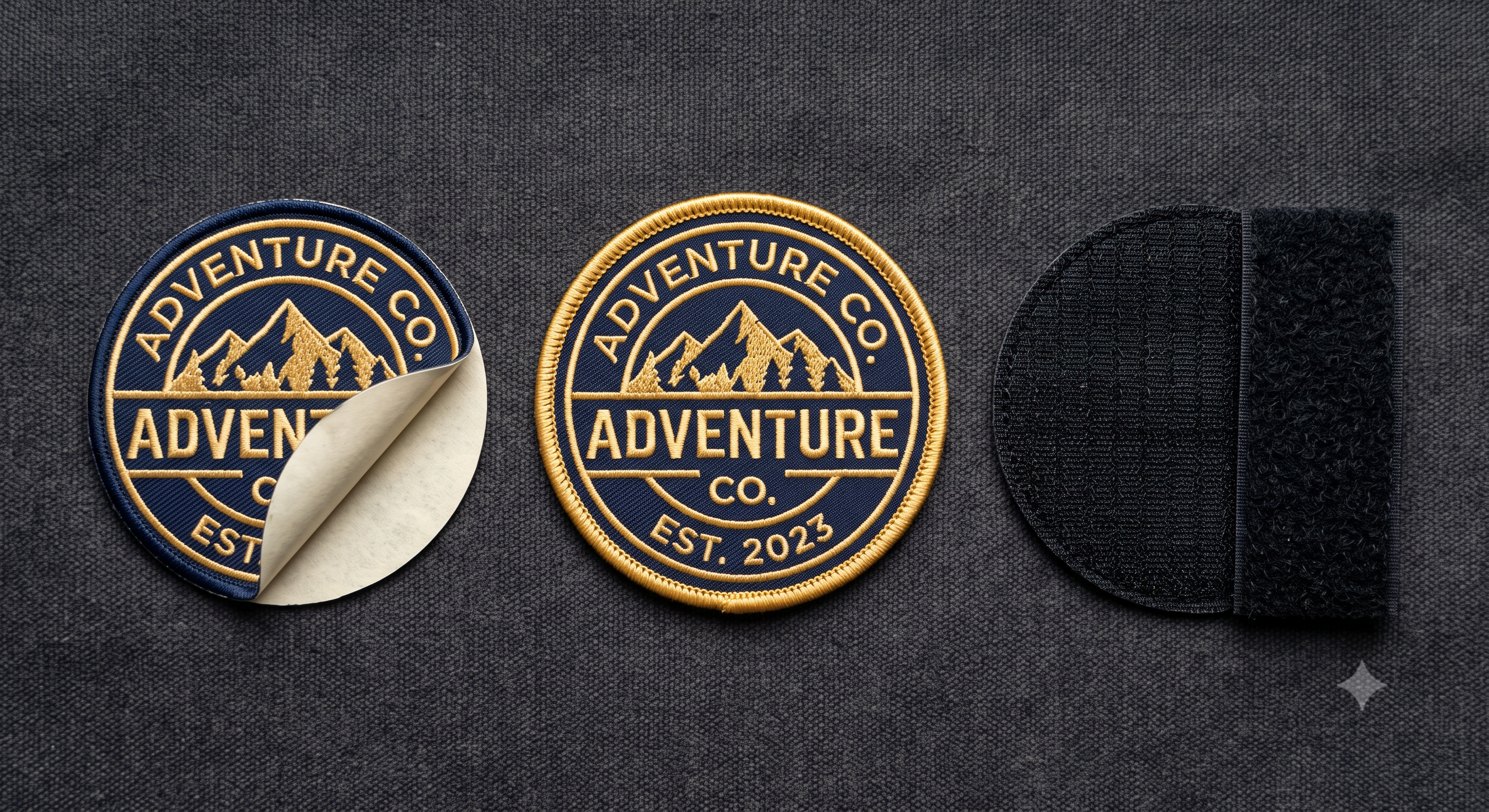
The answer isn't always straightforward because every backing option serves a different purpose. Iron-on patches offer convenience, sew-on patches provide unmatched durability, and Velcro patches deliver flexibility for applications where patches need to be changed regularly.
In this comprehensive guide, we'll explain how each backing works, compare their strengths and weaknesses, discuss the best applications for each type, and help you determine which option best suits your needs. By the end of this article, you'll have all the information you need to confidently order the right custom embroidered patches for your clothing, uniforms, hats, backpacks, or tactical gear.
Many people assume that every embroidered patch functions the same way. In reality, the backing plays a major role in determining how the patch performs over time. A high-quality embroidered patch with the wrong backing may fail long before the embroidery itself shows any signs of wear.
The right backing influences several important factors, including:
For example, if you're ordering custom logo patches for company uniforms that will be washed every week, an iron-on backing may not be the best choice. On the other hand, if you're producing promotional patches for an event where quick application is important, iron-on backing can save both time and labor. Understanding these differences before placing your order helps prevent unnecessary costs and ensures your patches perform exactly as expected.
Modern custom patches are available with several backing options, but the three most popular are:
Each option has its own advantages, limitations, and ideal applications. The best choice depends on how the patch will be used, how often the garment is washed, and whether the patch needs to be permanent or removable.
Let's examine each option in detail.
Iron-on patches remain one of the most popular choices because they are incredibly easy to apply. Instead of sewing the patch onto the garment, a layer of heat-activated adhesive is attached to the back of the patch during manufacturing. When heat is applied using a household iron or commercial heat press, the adhesive melts and bonds directly with the fabric fibers. Once cooled, the patch becomes firmly attached without requiring any stitching. This simple application process has made iron-on patches a favorite among clothing brands, schools, event organizers, hobbyists, and DIY enthusiasts.
One of the biggest advantages of iron-on patches is convenience. Unlike traditional sewing, applying an iron-on patch requires only a few minutes and very little experience.
Key benefits include:
Because of their ease of use, many businesses choose iron-on patches for promotional campaigns, charity events, and employee giveaways.
Iron-on backing performs best on fabrics that can safely withstand heat.
Recommended materials include:
These fabrics allow the adhesive to create a strong bond, ensuring the patch stays securely attached under normal use.
Although iron-on backing offers excellent convenience, it isn't suitable for every application.
Avoid using iron-on patches on:
Applying excessive heat to these fabrics may cause discoloration, warping, or permanent damage. Additionally, garments that undergo frequent industrial washing or high-temperature drying may eventually weaken the adhesive bond.
For work uniforms, military clothing, or heavy-duty apparel, sew-on backing generally provides better long-term reliability.
Yes, and many professionals actually recommend it.
A popular technique is to first iron the patch into position and then sew around the border. This approach combines the convenience of heat application with the long-term durability of stitching. The result is one of the strongest and most reliable methods for attaching custom embroidered patches, especially on jackets, uniforms, and backpacks that experience regular wear.
If durability is your top priority, sew-on patches remain the industry standard. Unlike iron-on patches that rely on heat-activated adhesive, sew-on patches are permanently stitched onto the fabric using either a sewing machine or hand stitching. This traditional attachment method has been trusted for decades because it offers unmatched strength and reliability.
Whether you're ordering custom embroidered patches for uniforms, work wear, motorcycle clubs, sports teams, or school apparel, sew-on backing ensures your patches stay securely attached even after years of use.
Businesses, military organizations, law enforcement agencies, and educational institutions continue to choose sew-on patches because they withstand frequent washing, harsh working conditions, and everyday wear better than any other backing option.
The biggest advantage of sew-on patches is their exceptional durability. Since the patch is physically stitched into the garment, it won't peel off due to heat, moisture, or repeated laundering.
Other benefits include:
For organizations investing in custom logo patches or uniform patches, sew-on backing provides peace of mind because the patches remain firmly attached under demanding conditions.
Sew-on patches are incredibly versatile and work well across many industries. They are commonly used for:
Because sewing does not require heat, sew-on patches are also suitable for delicate or heat-sensitive fabrics where iron-on adhesives cannot be used safely.
Although sewing requires more time than ironing, many customers consider it a worthwhile investment. Once sewn, the patch becomes part of the garment itself. It remains secure through countless washing cycles, outdoor activities, and demanding work environments.
If your goal is long-term durability, sew-on backing is often the best choice.
Like any backing option, sew-on patches also have a few disadvantages.
Installation requires more time and may require professional sewing equipment when dealing with large quantities. If hundreds of patches need to be applied, labor costs can increase compared to iron-on alternatives. Additionally, removing a sewn patch may leave small needle holes in the fabric. While these holes usually become less noticeable after washing, they can still remain visible on certain materials.
Despite these minor drawbacks, sew-on backing continues to be the preferred choice for customers who value durability over convenience.
For applications where patches need to be changed frequently, Velcro patches offer a practical and convenient solution.
Instead of permanently attaching the patch to the garment, Velcro uses a hook-and-loop fastening system. One side of the Velcro is sewn onto the garment, while the matching side is attached to the back of the embroidered patch. This allows the patch to be attached, removed, and replaced within seconds without requiring additional sewing or heat.
Because of this flexibility, Velcro patches have become extremely popular among military personnel, police departments, security companies, emergency responders, outdoor enthusiasts, and tactical gear manufacturers.
Velcro patches combine durability with convenience.
Some of their biggest advantages include:
Many companies also use Velcro-backed custom patches for employee identification, allowing name badges to be updated whenever staff changes occur.
Velcro patches are designed for situations where flexibility is important.
Common applications include:
Collectors also appreciate Velcro-backed custom embroidered patches because they can display and rotate different designs without permanently attaching them to clothing.
Many people assume removable patches are less durable than permanent ones.
In reality, high-quality Velcro patches are surprisingly strong. Premium hook-and-loop material can withstand hundreds of attachment cycles before showing noticeable wear. As long as the Velcro is kept clean and free from lint, dust, and debris, it maintains a secure hold for years.
For tactical and outdoor use, Velcro remains one of the most dependable removable patch solutions available.
Although Velcro patches offer unmatched flexibility, there are a few considerations.
First, the hook panel must be sewn onto the garment before the patch can be attached. This initial setup requires some effort, although it only needs to be done once. Second, hook material naturally collects lint, pet hair, and dust over time. Occasional cleaning helps maintain a strong grip.
Finally, while Velcro provides excellent everyday security, permanently sewn patches still offer slightly greater resistance under extremely heavy use.
Choosing the right backing becomes much easier when you compare each option based on the features that matter most.
| Feature | Iron-On | Sew-On | Velcro |
|---|---|---|---|
| Installation | Very Easy | Moderate | Easy |
| Durability | Good | Excellent | Excellent |
| Wash Resistance | Moderate | Outstanding | Excellent |
| Removable | No | No | Yes |
| Reusable | No | No | Yes |
| Best for Uniforms | Good | Excellent | Excellent |
| Best for Fashion | Excellent | Very Good | Good |
| Best for Tactical Gear | Limited | Very Good | Excellent |
| Heat Required | Yes | No | No |
| Professional Finish | Excellent | Excellent | Excellent |
Choosing the best backing depends on how your patches will be used.
Remember, there is no single "best" backing. The right choice depends on your garment, your work environment, and how often the patch needs to be removed or replaced.
Finding the right patch backing is only one part of creating high-quality custom embroidered patches. Equally important is choosing a trusted patch manufacturer that understands your requirements and delivers products built to last. At Digitizing Mill, we specialize in designing and manufacturing premium-quality custom patches for businesses, schools, military organizations, sports teams, motorcycle clubs, fashion brands, nonprofits, and individuals worldwide.
Our goal isn't simply to manufacture patches, we help customers choose the right materials, embroidery style, border finish, and backing option to ensure every patch performs exactly as intended. Whether you need a small batch for a local event or thousands of patches for your organization, we maintain the same commitment to quality, precision, and customer satisfaction.
When you work with Digitizing Mill, you benefit from:
We understand that every project is unique. That's why our team works closely with each customer to recommend the most suitable patch backing based on the fabric type, intended application, and expected lifespan.
Whether you're ordering custom logo patches for employees, uniform patches for schools, tactical patches for security teams, or promotional embroidered patches for your brand, Digitizing Mill delivers quality you can trust.
Before placing your order, consider these practical tips to ensure you choose the right patch backing for your needs.
Different fabrics react differently to heat and stitching. Cotton and denim are excellent for iron-on patches, while nylon, leather, and waterproof materials generally require sew-on backing.
If the garment will be washed regularly, sew-on patches provide superior durability. Iron-on patches are better suited for apparel that receives light or occasional washing.
If you expect to change names, ranks, or designs in the future, Velcro backing offers unmatched flexibility without damaging the garment.
Fashion apparel often benefits from iron-on patches due to their convenience, while work uniforms and tactical gear usually perform better with sew-on or Velcro backing.
Even the best backing option cannot compensate for poor embroidery quality. Working with an experienced patch manufacturer ensures your patches look professional and last longer.
Choosing the right patch backing is just as important as selecting the embroidery design itself. While all three backing options serve different purposes, understanding their strengths helps you make a smarter investment.
If convenience is your priority, iron-on patches offer a fast and simple solution. For maximum durability and long-term performance, sew-on patches remain the gold standard. If flexibility and easy replacement are important, Velcro patches provide the perfect balance between convenience and security.
At Digitizing Mill, we believe every customer deserves custom patches that not only look exceptional but also perform reliably in real-world conditions. That's why we offer expert guidance throughout the ordering process, helping you select the best backing option based on your specific needs.
Whether you're ordering a single custom design or thousands of embroidered patches for your organization, we're committed to delivering premium craftsmanship, competitive pricing, and outstanding customer service. Ready to bring your design to life? Contact Digitizing Mill today for a free quote and let our experts help you create custom patches that combine quality, durability, and professional style.
Sew-on backing is considered the most durable because the patch is stitched directly onto the garment. It withstands frequent washing, heavy use, and long-term wear better than other backing options.
Yes. Many customers first apply the patch using heat and then stitch around the border. This combination provides excellent durability while making installation easier.
Absolutely. Velcro patches are widely used on military, police, security, medical, and tactical uniforms because they allow patches to be removed and replaced quickly without damaging the garment.
Iron-on patches adhere best to cotton, denim, canvas, polyester blends, and similar fabrics that can safely withstand heat during application.
High-quality iron-on patches can last for a long time when applied correctly. However, frequent washing and high-heat drying may gradually weaken the adhesive. For garments that are washed regularly, sew-on backing is generally recommended.
Yes. At Digitizing Mill, you can mix iron-on, sew-on, and Velcro backings within the same order to suit different applications and customer needs.
Yes. Premium hook-and-loop Velcro patches are designed to be attached and removed hundreds of times while maintaining a secure hold with proper care.
For most business uniforms, sew-on backing offers the best combination of durability, professional appearance, and long-term performance.
The best backing depends on your fabric, intended use, and whether the patch needs to be permanent or removable. The team at Digitizing Mill can help you choose the ideal option before production begins.
Yes. In addition to manufacturing premium custom patches, Digitizing Mill also provides professional design assistance to help transform your logo, artwork, or concept into a high-quality embroidered patch.